
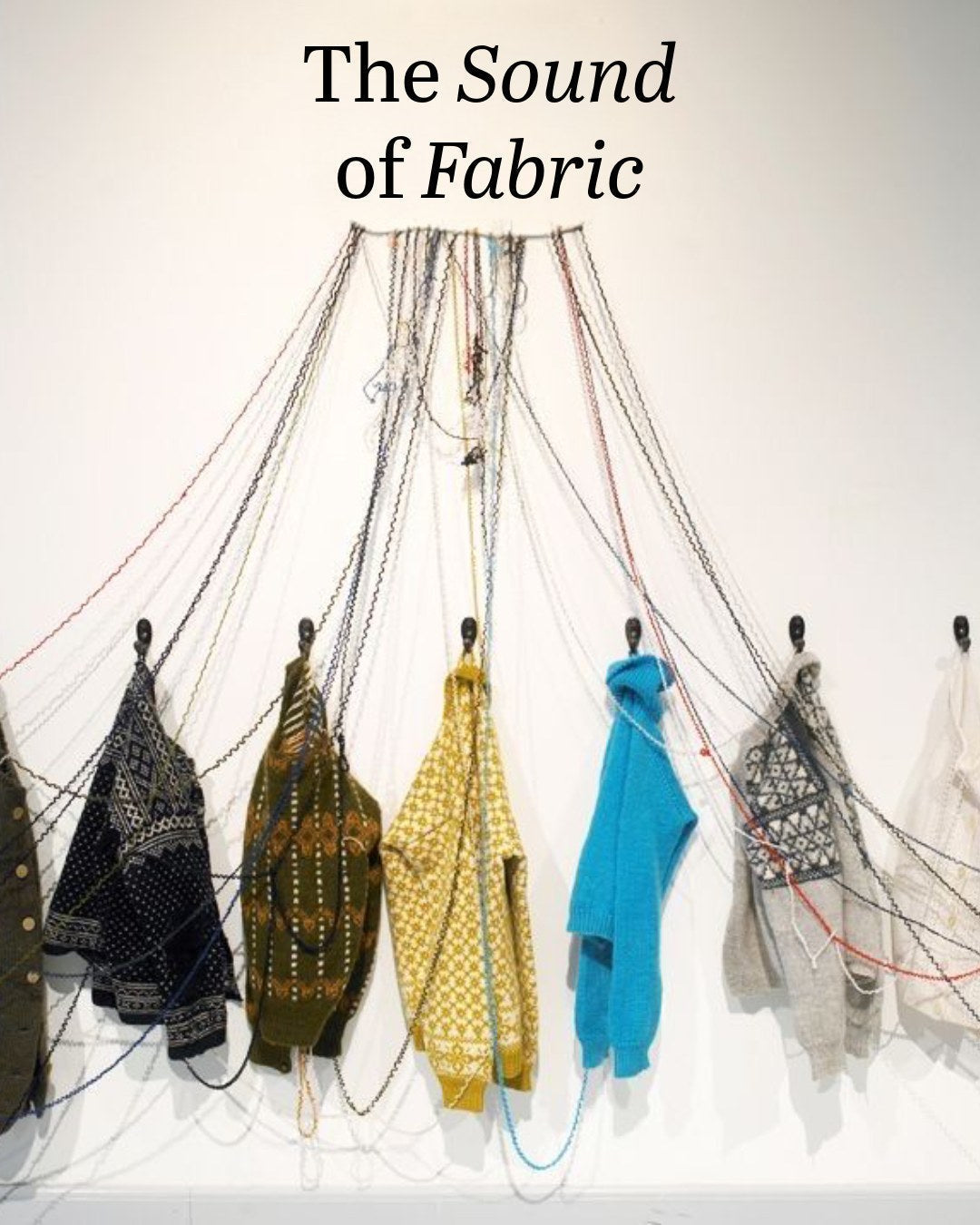
There is a moment, right before a tabla player's palm meets the skin of the drum, when the whole room seems to inhale. Fashion has that same moment. It happens right before a garment is worn, the half-second where fabric is still just fabric, and then a body moves through it, and suddenly it has rhythm. Both clothes and music are built from repetition, tension, silence, and surprise. Both are made to be experienced in time, not just in a single glance.
If Patchwork Were Folk
Folk music doesn't ask permission. It's made by hands that learned from other hands, a grandmother's lullaby, a harvest chant, a lament passed down at a well. Nothing about it is precious. Everything about it is true.
Patchwork works the same way. It is the folk song of textile, pieced together from leftover cloth, old saris, a father's worn-out shirt, a scrap too beautiful to throw away. Each patch carries its own history into the new garment, the way each folk verse carries the memory of the voice that first sang it. There's no single origin story for a patchwork quilt or a patchwork jacket. There are dozens, stitched into coexistence.
And like folk music, patchwork has a rhythm you can see, the eye moves from patch to patch the way an ear moves from beat to beat, never quite settling, always finding a new small surprise. It's imperfect on purpose.
If Embroidery Were Classical
Classical music is discipline pretending to be effortless. Years of riyaz hide behind three minutes of a perfectly placed taan. Every note is intentional. Every silence is composed, not accidental. There's a structure underneath a raga's grammar, a raga's mood and the artist's genius is how gracefully they can improvise within that structure without ever breaking it.
Embroidery is the same kind of discipline. Zardozi, chikankari, aari work, these are not improvisations. They are compositions. A karigar sits with a needle for hours, sometimes days, building a single motif thread by thread.
And just as a classical performance has a build, alaap, jod, jhala, each stage more intricate than the last, the finest embroidered pieces reveal themselves in layers.
From across the room, it's a silhouette. Up close, it's a universe of knots and threadwork you could study for an hour and still find something new. That's not decoration. That's composition.
We often talk about fashion in terms of trend cycles and seasons, what's "in," what's "out." But clothes, like music, aren't really about trends. They're about inheritance and invention happening at the same time. A patchwork jacket carries a hundred small histories the way a folk song carries a hundred small singers who came before. An embroidered piece carries the discipline of a tradition the way a raga carries centuries of grammar, refined but never frozen.
Maybe that's the real reason certain garments make us feel something the moment we see them, before we even know the designer, before we know the price, before we know a single fact about them. They're not just dressed. They're composed. And somewhere in our body, before our mind catches up, we recognize the music.